PPTX
Design & reverse-engineering deck
PPTX · 9.7 MB
Body design, structural response, and an assembled vehicle.
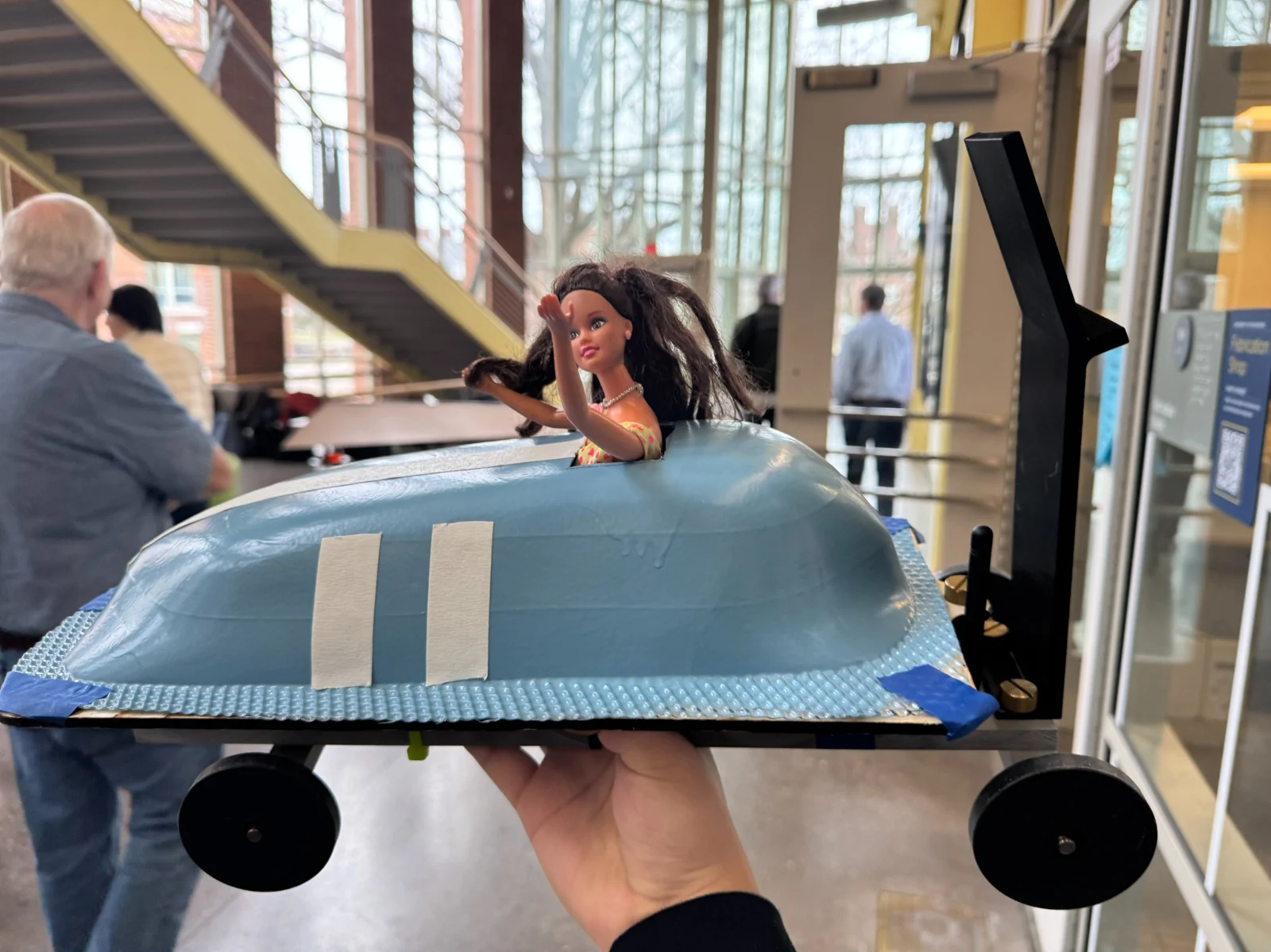
The team’s assembled gravity car with the fabricated body.
A small gravity-car project combining aerodynamic body development, fabrication, component modeling, and structural analysis. The work followed the design from a packaging envelope to a physical car and an assessment of its behavior.
My contributions included comparison of wind-tunnel and simulation results, structural analysis using transferred CFD pressure, and models or drawings for the phone holder, wheel, battery chamber, and coupling. Other teammates led body surfacing and mold machining.
Gravity-car test footage.
The project produced a physical gravity car, detailed component documentation, and a structural response model. The aerodynamic comparison showed substantial disagreement, which made experimental setup and model assumptions a central part of the analysis.
A model is useful when its limitations are understood. Working through the mismatch between wind-tunnel and CFD results helped identify what a better test would need to control.