PDF
Final design report
PDF · 2.8 MB
Optimizing a balsa structure from simulation through fabrication and testing.
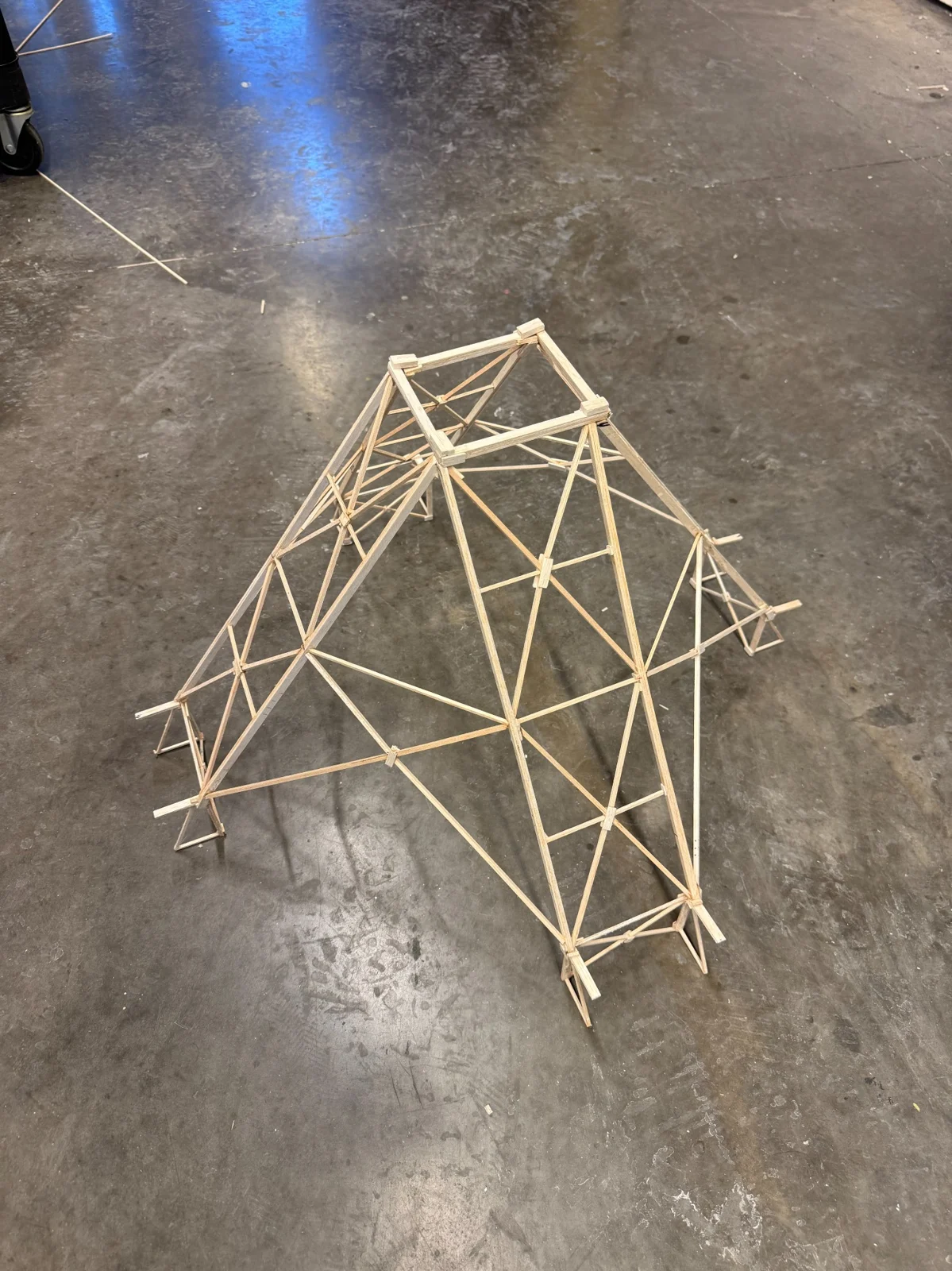
The fabricated balsa structure, with cross-bracing and reinforced joints.
In Professor Muir’s fall 2025 design course, our team set out to design and manufacture a balsa-wood structure with the highest possible strength-to-weight ratio. We compared CAD concepts for structural performance and manufacturing feasibility, then developed the chosen design through finite element analysis, fabrication, and physical testing.
I performed FEA on the selected structure to identify which members were likely to fail first and where additional stiffness was needed. I iterated on the geometry and beam sizes, helping turn the team’s initial concept into a stronger structure that could be manufactured with balsa wood and glue.
The final design achieved a simulated strength-to-weight ratio of 3,173 and a physical strength-to-weight ratio of 2,845. The difference reflected the added mass of glue and extra material at the joints, showing how fabrication details affect the performance of an optimized design.
Taking the structure from CAD and FEA into fabrication and testing strengthened my confidence in tackling more sophisticated, real-world engineering challenges. I learned to consider joint geometry, adhesive application, and assembly accuracy alongside structural performance. This experience prepared me to approach projects shaped by practical constraints and customer requirements.